
彭佳师
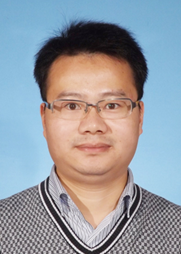
彭佳师/Jiashi Peng
博士、教授,博士生导师
入选湖南省“三尖”创新人才工程、芙蓉计划湖湘青年英才、湖南省优青、湖南省普通高校青年骨干教师、湘潭市高层次人才、湖南科技大学“湘江学者”(拔尖I类)。主要从事植物矿质营养代谢及其与微生物互作机理方面的研究。获上海市自然科学二等奖、湖南省普通高校教学成果奖三等奖、全国煤炭行业教学成果奖特等奖等奖励。
Email: jspeng@hnust.edu.cn
学习和工作经历
毕业于中国科学院上海生命科学研究院,获博士学位;先后在中国科学院分子植物科学卓越创新中心/植物生理生态研究所从事博士后研究和担任副研究员;2019年加入湖南科技大学
学术兼职
中国植物生理与植物分子生物学学会植物修复生物学专业委员会,秘书长
湖南省植物生理与植物分子生物学学会,常务理事
湖南省植物学会,理事
湖南省生物化学与分子生物学学会青年委员会,委员
《植物学报》青年编委
教学及获奖:
本科生课程:《生物统计学》、《实验设计与数据分析》
研究生课程:《植物逆境生理学》
指导本科生获得全国大学生生命科学竞赛国家级奖励5项,省级奖励3项;指导本科生获创新创业计划国家级项目2项,其中重点支持领域项目1项;指导研究生获湖南省研究生创新论坛论文一等奖2项,二等奖1项;
已毕业研究生:张雪洁、张培红、胡衡亮、周颖、熊嘉妮、欧阳钢、李宗玥、王晶琳、刘云波、张睿
热忱欢迎各位同学联系报考硕士、博士研究生,同时欢迎优秀在学本科生联系加入课题组进行创新研究!
承担的课题项目
国家自然科学基金项目(2017、2020、2025)
湖南省自然科学基金项目(2020、2022)
湖南省“三尖”创新人才工程项目(2023)
湖南省教育厅创新平台开放基金项目(2020)
中国博士后科学基金项目 (2016)
近年部分第一/通讯(含共同)作者论文
Gong JM*, Peng JS*, Meng S, Wang YT (2026). Kill two birds with one stone: breeding remediation-rice to fulfill safe food production and heavy metal remediation. Molecular Plant, https://doi.org/10.1016/j.molp.2026.05.001
Peng JS*, Li ZY, Gu TY, Gao Y, Liu SH, Chen SY (2026). Organellar transporters in regulating metal long-distance transport in plants and the potential for crop improvement. Plant Stress, 21: 101422.
Hu HL, He YT, Gao Y, Chen SY, Gu TY, Peng JS* (2025). NnMTP10 from Nelumbo nucifera acts as a transporter mediating manganese and iron efflux. Plant molecular biology, 115(1): 26.
Xu ZJ#, Peng JS#, Fu YL#, Zhao J, Peng Y, Liu BH, Hu XJ, Liu YC, Duan MJ, Ye NH*, Yi ZX*, Meng S* (2025). Abscisic acid reduces Cd accumulation by regulating Cd transport and cell wall sequestration in rice, Journal of Integrative Agriculture, 10(24): 3703-3718.
Zhou Y, Gu T, Gao Y, Qu J, Zheng H, Guan Y*, Peng JS* (2025). Transcriptomic Profiling Reveals the Involvement of the Phenylpropanoid–Lignin Pathway in the Response of Maize Roots to Zinc Stress. Plants, 14(11):1657.
Peng JS*, Zhang XJ, Xiong JN, Zhou Y, Wang WL, Chen SY, Zhang DW, Gu TY* (2023). Characterization of genes involved in micronutrients and toxic metals detoxification in Brassica napus by genome-wide cDNA library screening. Metallomics, 15: mfad068.
Long Y, Peng JS* (2023). Interaction between Boron and Other Elements in Plants. Genes, 14:130.
Zhang PH, Zhang XJ, Tang TW, Hu HL, Bai NN, Zhang DW, Meng S, Peng JS* (2022). Isolation of Three Metallothionein Genes and Their Roles in Mediating Cadmium Resistance. Agronomy, 12, 2971.
Han TL, Tang TW, Zhang PH, Liu M, Zhao J, Peng JS*, Meng S* (2022). Cloning and Functional Characterization of SpZIP2. Genes, 2022, 13:2395.4.
Peng JS#, Zhang BC#, Chen H#, Wang MQ#, Wang YT, Li HM, Cao SX., Yi HY, Wang H, Zhou YH*, Gong JM* (2021). Galactosylation of Rhamnogalacturonan-II for cell wall pectin biosynthesis is critical for root apoplastic iron reallocation in Arabidopsis. Molecular Plant, 14(10):1640-1651.
Peng JS*, Guan YH, Lin XJ, Xu XJ, Xiao L, Wang HH, Meng S* (2020). Comparative understanding of metal hyperaccumulation in plants: a mini-review. Environmental Geochemistry and Health, 43(4):1599-1607.
Lin JH#, Xu ZJ#, Peng JS#, Zhao J, Zhang GB, Xie J, Yi ZX, Zhang JH, Gong JM, Ye NH, Meng S. (2019). OsProT1 and OsProT3 Function to Mediate Proline- and γ-aminobutyric acid-specific Transport in Yeast and are Differentially Expressed in Rice (Oryza sativa L.). Rice, 12:79.
Peng JS, Ding G, Meng S, Yi HY, Gong JM* (2017). Enhanced metal tolerance correlates with heterotypic variation in SpMTL, a metallothionein-like protein from the hyperaccumulator Sedum plumbizincicola. Plant Cell and Environment. 40: 1368-1378.
Peng JS#, Wang YJ#, Ding G, Ma HL, Zhang YJ, Gong JM* (2017). A pivotal role of cell wall in Cd accumulation in the Crassulaceae hyperaccumulator Sedum plumbizincicola. Molecular Plant, 10(5):771-774.
陈思颖, 王晶琳, 李颖怡, 卢湘鑫, 张培红, 邱庆红, 高艳, 顾天宇, 彭佳师* (2026). 伴矿景天SpMTP10介导锰积累的机制. 植物学报, 61(3): 416-427. (封面文章)
贺玉婷,李宗玥,王晶琳,赵星宇,陈思颖,刘思宏,顾天宇,高艳,唐新科*, 彭佳师* (2025).油菜金属耐受蛋白基因BnMTP10参与锰元素积累调控.生物工程学报, 41(07): 2843-2854.
汪结明, 彭虹云, 薛天舒, 彭佳师* (2025). 丛枝菌根真菌增强忍冬对锰胁迫的耐受性及其生理机制. 植物生理学报,2025,61(05):685-695.
熊嘉妮#, 李宗玥#, 胡衡亮, 顾天宇, 高艳,彭佳师* (2025). OsLCT1 启动子驱动 OsNRAMP5 表达对镉向水稻种子迁移的影响. 中国农业科学, 58(07):1259-1268.
彭佳师#, 王娅婷#, 王梦琦#, 卢玲丽#, 汪鹏#, 李柱#, 李赛#, 陈思颖#, 孟栓#, 顾天宇#, 徐文忠#, 晁振飞#, 黄煜琪#, 金崇伟*, 晁代印*, 陈彩艳*, 吴龙华*, 滕应*, 赵方杰*, 龚继明*(2024). 植物重金属镉积累调控机制及其应用研究进展. 植物生理学报, 60(02):185-210. (封面文章,同时编入中国植物生理与植物分子生物学学会植物生物学学科发展报告(2013-2023))
胡衡亮, 顾天宇, 陈思颖, 王垚, 彭佳师* (2024),莲中介导矿质元素胁迫耐受性基因的筛选与功能验证,中国农业科学, 57(05):980-988.
张雪洁, 张治远, 张仕泽, 白宁宁, 刘敏, 彭佳师*(2023). 甘蓝型油菜植物螯合肽合酶基因BnPCS1a的分离与功能验证. 植物生理学报, 59(5): 861–868.
张培红, 张仕泽, 张治远, 李明悦, 刘奕君, 张雪洁, 白宁宁, 马敏, 彭佳师* (2022). 伴矿景天SpHIPP45基因特异介导镉耐受性. 植物生理学报, 58: 1346–1352.
彭佳师* (2022). 生物统计学专业课教育融合劳动教育的初步设计. 生物工程学报, 38(5): 2019-2025.
王垚,胡博,邓小秋,蒋佳佳,杜兰芳,彭佳师* (2022). 伴矿景天 SpPCR3 基因提高酵母对镉的抗性. 植物生理学报, 58: 1353–1358.
彭佳师,易红英,龚继明* (2020). 超积累植物伴矿景天镉耐受基因 SpMT2 的分离及功能鉴定. 生物工程学报, 36(3): 541−548. (入选F5000中国精品科技期刊顶尖学术论文)
顾天宇, 龚韵秋, 张国斌, 彭佳师* (2020). 植被宏离子组分析方法的建立及重金属污染的监测应用, 植物生理学报, 2020, 56(3): 584-590.
Brief Biography of Dr. Jiashi Peng
Dr. Jiashi Peng received his Bachelor’s degree from Hunan University of Science and Technology (HNUST) in 2009 and commenced his graduate studies at the Shanghai Institutes for Biological Sciences (SIBS), Chinese Academy of Sciences (CAS) in the same year. He was awarded his Ph.D. in Genetics from SIBS, CAS, in 2015. Following a postdoctoral fellowship at the CAS Center for Excellence in Molecular Plant Sciences / Institute of Plant Physiology and Ecology, he joined the same institution as an Associate Professor in 2017. In 2019, Dr. Peng returned to HNUST, where he currently serves as a Full Professor in the Department of Bioengineering.
Dr. Peng leads a research team composed of six tenured faculty members. In recent years, the team has been funded by the National Key R & D Program, the National Natural Science Foundation of China, and the Hunan Province Science and Technology Innovation Program. Their research focuses on elucidating the molecular and physiological mechanisms governing accumulation and metabolism of minerals (including essential micronutrients and non-essential heavy metals) in plant and the regulatory networks of their interactions with the environment. Their research has resulted in over 40 published papers in recent 5 years. Dr. Peng received research awards and honors from the government of Shanghai and Hunan. He also holds academic positions in academic organizations such as the Chinese Society for Plant Biology and the Hunan Society for Plant Biology.